I have tried enough language-learning apps to know that the hardest part is usually not finding a lesson. It is staying with the routine when the novelty wears off. AI can help with practice and feedback, but it still works best when it gives you a reason to keep showing up. You may also like our AI tools for students and AI tools for seniors guides.
A few months ago, I found myself stuck trying to figure out ai tools for a client project. After digging through countless documentation pages and Stack Overflow threads, I realised there was no single resource that covered everything I needed. So I decided to write exactly what I wished I had found back then.Learning a new language is one of the most rewarding cognitive investments a person can make — and in 2026, AI has made it more accessible, personalised, and effective than at any point in history. The barriers that once made language learning difficult — lack of a conversation partner, expensive tutors, rigid curriculum that didn’t adapt to your level, and the frustration of practising without feedback — have been dramatically reduced by AI. Today’s AI language learning tools offer adaptive curricula that respond to your performance in real time, AI conversation partners available at any hour, instant pronunciation feedback, personalised vocabulary building, and immersive experiences that replicate the conditions of natural language acquisition. This guide covers the best AI tools for language learning available in 2026.
AI Language Learning Platforms
Duolingo with AI
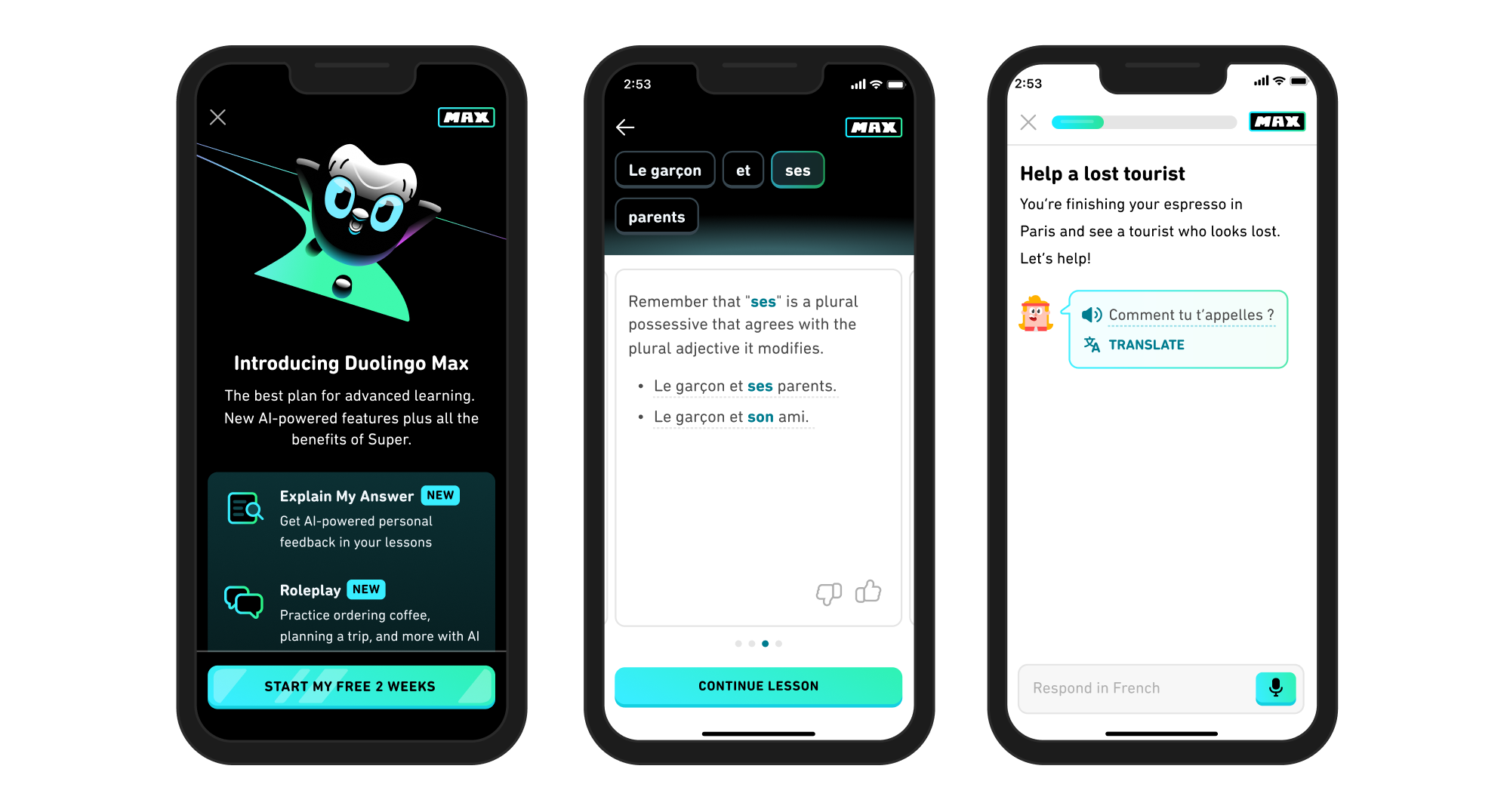
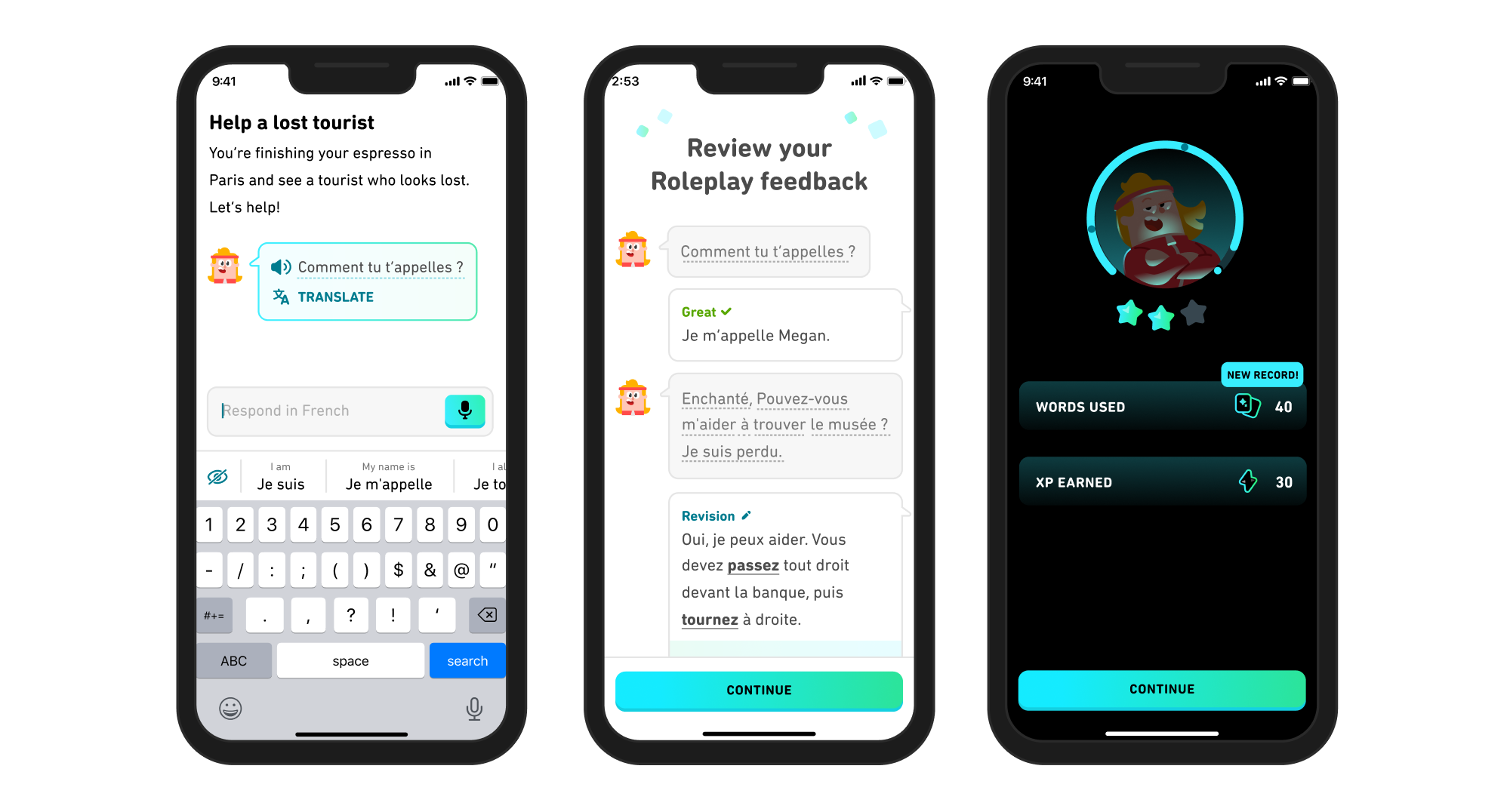
Duolingo remains the world’s most widely used language learning platform, with over 500 million learners across 40+ languages. Its AI has become dramatically more sophisticated, powering a fully adaptive learning system that analyses your performance across every exercise, identifies your specific weaknesses, and adjusts lesson content, difficulty, and review frequency in real time. Duolingo’s AI-powered speaking exercises use advanced speech recognition to evaluate pronunciation and provide instant corrective feedback. Its Duolingo Max subscription tier offers two AI-powered features — Explain My Answer (providing detailed explanations of why answers are correct or incorrect) and Roleplay (AI conversation scenarios with context-appropriate characters) — that bring the platform significantly closer to the experience of working with a human tutor.
Babbel with AI Conversation
Babbel’s AI-enhanced language learning platform focuses on practical, conversational language skills rather than gamified vocabulary building. Its AI analyses your learning history and conversation performance to personalise lesson content around the vocabulary, grammar structures, and conversation scenarios most relevant to your specific goals — whether travel, business, or everyday conversation. Babbel’s AI Speech Analyser provides detailed pronunciation feedback, breaking down individual phonemes and comparing your pronunciation to native speaker patterns. Its Live tutoring integration connects AI-driven practice sessions with access to human tutors for conversation practice, creating a blended learning experience that combines the scalability of AI with the irreplaceable nuance of human interaction.
Rosetta Stone with TruAccent AI
Rosetta Stone’s TruAccent speech recognition AI is among the most sophisticated pronunciation evaluation systems available in a consumer language learning app. It analyses your speech at the phoneme level, compares it to a database of native speaker patterns across regional accents, and provides precise feedback on specific sounds that need improvement. Rosetta Stone’s immersive method — teaching language through images and context without translation, mirroring natural language acquisition — is enhanced by AI that adapts the immersion pace to your response accuracy and learning speed. For learners who prioritise accent quality and natural-sounding speech, Rosetta Stone’s TruAccent AI provides unmatched guidance.
AI Conversation Partners
Speak App
Speak is an AI-powered language learning app built around conversational practice as its primary learning method. Its AI conversation partner engages you in open-ended dialogue in your target language, corrects pronunciation and grammar mistakes in real time, explains errors clearly, and adapts the conversation to your proficiency level and interests. Unlike scripted conversation exercises, Speak’s AI can respond to anything you say — creating genuinely dynamic conversation practice that builds real communicative confidence. For learners who feel they have plateaued with vocabulary-focused apps and need more speaking practice, Speak provides the most accessible and effective AI conversation partner available.
ChatGPT as a Language Tutor
ChatGPT has become one of the most versatile and widely used AI language learning tools available, functioning as an on-demand tutor, conversation partner, grammar explainer, vocabulary builder, and cultural guide. Ask it to conduct a conversation in French at intermediate level, explain the difference between Spanish subjunctive and indicative mood, generate practice sentences using new vocabulary, translate and explain idiomatic expressions, or create a personalised grammar exercise targeting your specific weaknesses. ChatGPT’s ability to adopt any teaching persona, adjust to any proficiency level, and respond to any language learning need makes it an extraordinarily flexible complement to structured language learning apps.
Tandem with AI Assistance
Tandem connects language learners with native speakers for language exchange — you help a native speaker of your target language learn your language, and they help you in return. Its AI features include real-time translation assistance, grammar correction suggestions, and AI-powered message coaching that helps you express what you mean in your target language when you are stuck. Tandem’s AI matching algorithm connects you with compatible language exchange partners based on your native language, target language, interests, and learning goals. The combination of genuine human connection with AI assistance makes Tandem one of the most effective tools for developing natural, colloquial language skills.
AI Vocabulary and Grammar Tools
Anki with AI-Enhanced Decks
Anki’s spaced repetition system (SRS) is the most scientifically validated vocabulary memorisation method available, scheduling flashcard reviews at the precise intervals that maximise long-term retention based on your individual performance history. The AI community around Anki has produced thousands of pre-built decks for every major language and proficiency level, and AI tools now exist to automatically generate personalised Anki decks from any text you are reading or any vocabulary list you provide. For serious language learners who want to build a large, deeply retained vocabulary efficiently, Anki’s AI-optimised spaced repetition remains the gold standard method.
LingQ
LingQ is an AI-powered extensive reading and listening platform that allows learners to import any content in their target language — articles, books, podcasts, YouTube videos, Netflix subtitles — and study it with AI-powered vocabulary tracking and spaced repetition. Its AI identifies which words you know and which are new, allows you to save unknown words as “LingQs” with translations and example sentences, and tracks your vocabulary growth over time. LingQ’s philosophy — that language acquisition comes primarily through massive exposure to comprehensible input rather than grammar study — is powerfully enabled by AI that makes any authentic content in your target language accessible and learnable.
AI Pronunciation and Speaking Tools
Elsa Speak
ELSA (English Language Speech Assistant) is an AI-powered English pronunciation app that uses advanced speech recognition to provide detailed, actionable feedback on pronunciation at the phoneme, word, and sentence level. Its AI identifies specific sounds that are difficult for speakers of your native language, creates a personalised pronunciation training programme targeting your specific challenges, and tracks your improvement over time with detailed progress metrics. ELSA’s AI has been trained on thousands of hours of English speech from native and non-native speakers, giving it the nuanced pattern recognition needed to provide genuinely useful pronunciation feedback for speakers of over 50 native languages.
Speechling
Speechling combines AI-powered pronunciation practice with human coach feedback — you record yourself speaking target language sentences, the AI provides instant automated feedback, and human coaches provide personalised audio corrections and encouragement. This hybrid model captures the scalability and immediacy of AI with the nuanced, personalised feedback that only human coaches can provide for the most subtle pronunciation challenges. Speechling’s approach is particularly effective for learners working on tonal languages like Mandarin, Vietnamese, and Thai, where the subtlety of tonal distinctions benefits from human coach validation.
AI Immersion and Media Tools
Language Reactor
Language Reactor is a browser extension that transforms Netflix, YouTube, and other streaming services into immersive language learning environments. Its AI adds dual subtitles (your native language and your target language simultaneously), allows you to pause and get instant translations and grammar explanations for any word or phrase, saves vocabulary to a personal word list with spaced repetition review, and adjusts playback speed for comprehension. For learners at intermediate level and above who want to transition from structured lessons to authentic content consumption, Language Reactor makes the immersion phase of language learning dramatically more accessible and structured.
Building Your AI Language Learning Stack
The most effective AI language learning approach in 2026 combines structured learning with conversational practice and immersive exposure. Use an adaptive platform like Duolingo or Babbel for daily structured practice and vocabulary building, supplement with an AI conversation partner like Speak or ChatGPT for speaking confidence, build vocabulary systematically with Anki’s spaced repetition, and consume authentic content in your target language using Language Reactor. The AI tools available in 2026 mean that consistent daily practice of even 20–30 minutes can produce genuine communicative proficiency in a new language within 12–18 months — a transformation that would have required years of expensive classes or immersive travel just a decade ago.
Comments
Post a Comment