One of the most frequent questions from developers and technical founders in 2026 is simple: what actually differentiates an autonomous AI agent from an everyday AI chatbot? Many guides lean heavily on hype without explaining technical reality. This guide strips away the buzzwords and explains how autonomous AI architectures operate from first principles.
Artificial intelligence has shifted from passive autocomplete into goal-driven autonomy. Tech teams across the globe are deploying agents to automate customer success, execute automated code refactoring, monitor live infrastructure, and orchestrate outbound sales pipelines. But what makes an agent distinct? How does it make decisions? What does this mean for engineering teams? Here is the complete breakdown.
What Is an AI Agent?
An AI agent is a software system that perceives its environment, reasons through state changes, calls external tools, and takes sequential actions to achieve an objective without requiring constant human prompt injection at every turn. While a traditional chatbot produces a single text response and halts, an AI agent operates within a stateful loop: evaluating outputs, handling unexpected errors, branching into fallback strategies, and validating results against defined acceptance criteria.
Video Guide: The 2026 AI Agent Architecture & Practical Benchmarks
Watch an end-to-end stress test comparing multi-step research, tool execution, and document delivery across leading platforms:
The Four Foundations of Autonomous AI Agents
- Perception & Context Ingestion: Parsing API payloads, terminal STDOUT, DOM elements, database rows, and document files into structured schema objects.
- Reasoning & Planning: Using frontier LLMs to plan dependencies, perform deductive reasoning, and synthesize logic.
- Tool Invocation: Calling sandboxed shell tools, HTTP APIs, vector databases, and headless browsers with verified input validation.
- Persistent Memory: Managing ephemeral scratchpads alongside persistent episodic vector stores and operational skill registries.
1. Autonomous Software Engineering Agents (OpenHands)
Software development is one of the premier testbeds for autonomous AI systems. Agents read entire codebases, trace stack traces, write test suites, and submit verified pull requests.
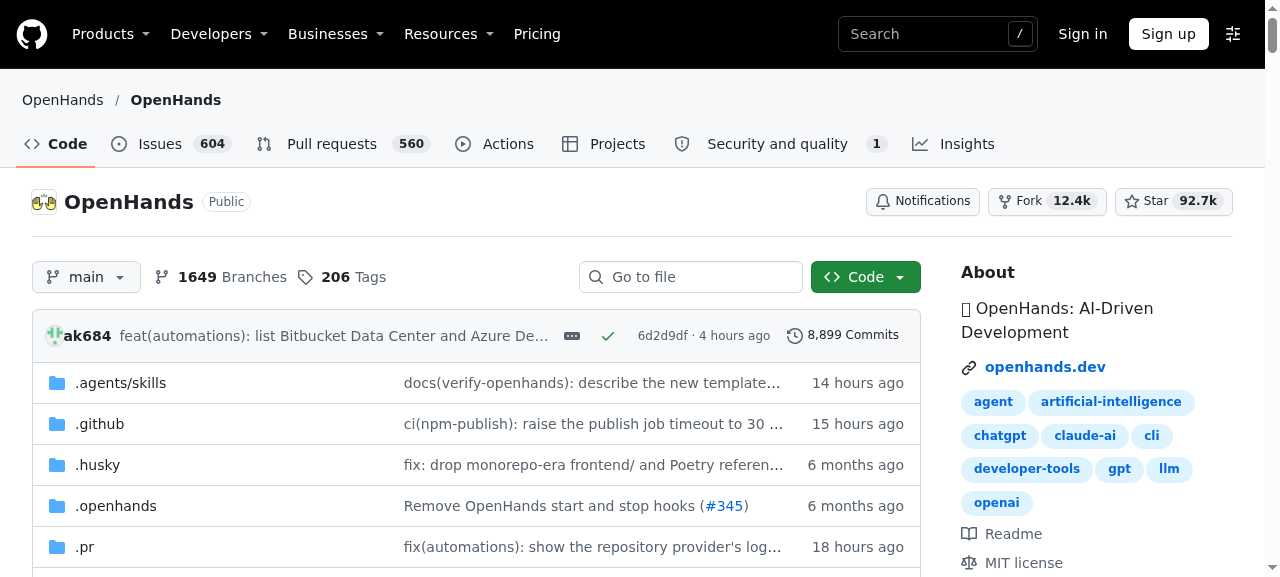
Platforms like OpenHands demonstrate the power of coupling an LLM brain with bash access, file tree inspection, and Dockerized sandboxes to solve real-world GitHub issues end to end.
2. Visual Agent Orchestration & RAG Pipelines (Dify)
Teams deploying production agents often prefer low-code visual workflow builders to wire LLM prompts to enterprise databases and SaaS tools.
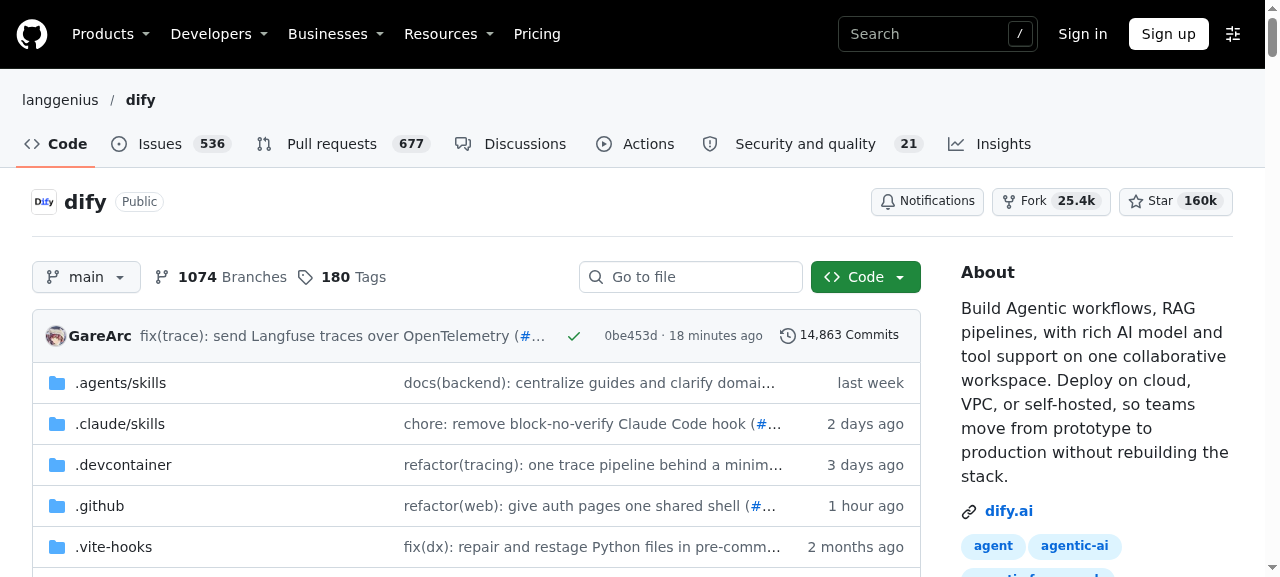
Dify allows engineers to orchestrate multi-agent workflows, manage API quotas, and ground responses with hybrid vector search without writing boilerplate glue code.
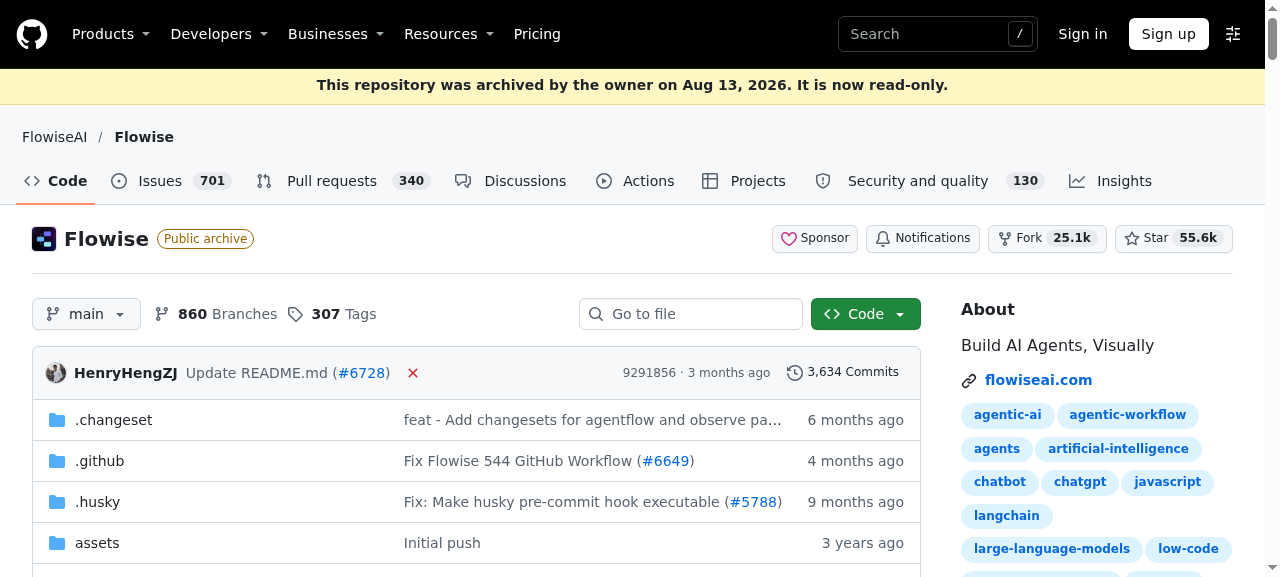
3. Interactive Node-Based Agent Workflows (Flowise)
Node-based drag-and-drop frameworks simplify configuring custom memory modules, prompt templates, and custom tool integrations for rapid prototyping.
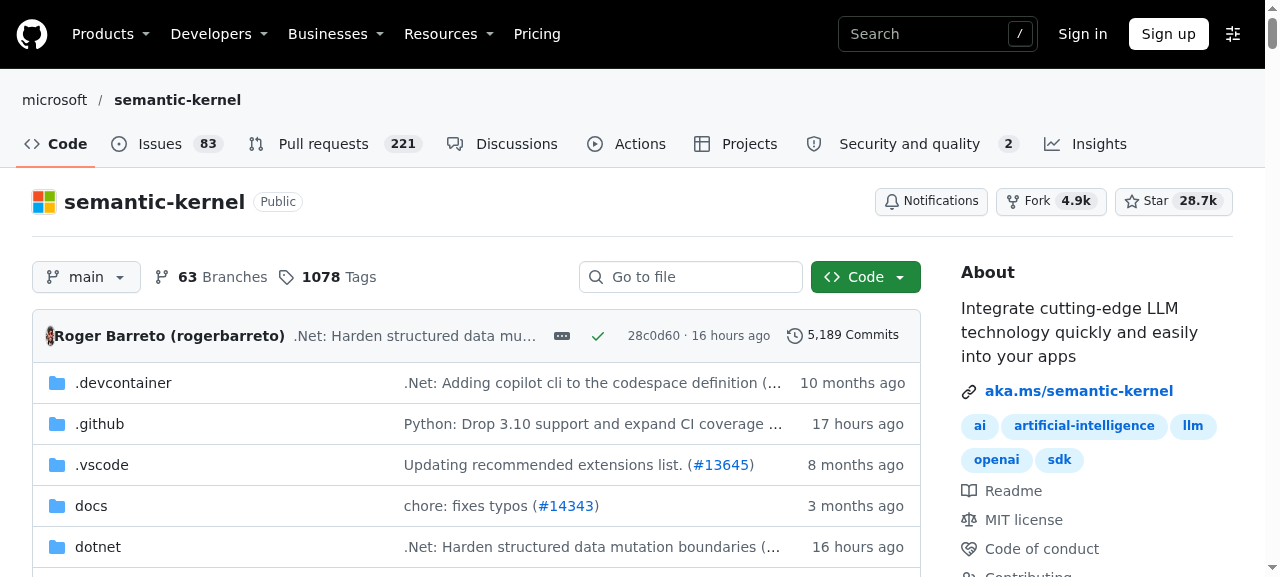
4. Enterprise Integration SDKs (Microsoft Semantic Kernel)
For large enterprise systems, integrating LLM capabilities into legacy C# and Java architectures requires strict type safety and compliance controls.
Video Walk-Through: Testing Top Autonomous AI Agents in Production
Practical review evaluating autonomous task execution and the difference between simple prompts and true multi-step systems:
Chatbot vs. Autonomous AI Agent Comparison
| Capability | Standard AI Chatbot | Autonomous AI Agent |
|---|---|---|
| Interaction Model | Single-turn prompt and response | Multi-step loop toward an objective |
| Tool Use | Limited or none (text only) | Native shell, APIs, databases, browsers |
| Error Handling | Halts or hallucinates on errors | Self-reflects, debugs, and tries alternate routes |
| Persistence | Session ends with active chat | Saves episodic memory and learned procedures |
| Autonomy | User must guide every intermediate step | User defines goal; agent manages execution |
As you transition into agentic engineering, focus on deterministic validation at every step. High-performing autonomous agents aren't built on prompt cleverness alone — they succeed because of rigorous sandbox isolation, reliable API contracts, and bounded execution loops.
Build Autonomous Enterprise AI with AppSwifts
Looking to deploy custom production AI agents that automate complex business workflows, integrate with existing APIs, and run securely? AppSwifts builds end-to-end multi-agent architectures engineered for enterprise reliability.
Comments
Post a Comment