A few months ago, I found myself stuck trying to figure out AI agent platforms for a client project. After digging through countless documentation pages and architecture guides, I realised there was no single resource that covered everything needed in production. So I decided to write exactly what I wished I had found back then.
The AI agent platform landscape in 2026 has never been more competitive — or more capable. Every major technology company is racing to provide the best infrastructure for building and deploying AI agents, and the differences between platforms can have a dramatic impact on what your agents can do, how easy they are to build, how reliable they are in production, and how much they cost to run. Whether you are a business owner looking to deploy your first AI agent, a developer building custom agent systems, or an enterprise architect evaluating platforms for large-scale deployment, this guide gives you the definitive comparison of the leading AI agent platforms in 2026.
How to Choose an AI Agent Platform
Before diving into specific platforms, it is worth understanding the key dimensions on which AI agent platforms differ — the factors that should drive your platform selection decision:
- Underlying model quality: The intelligence, reasoning capability, and reliability of the LLM powering the agent.
- Tool ecosystem: The range and quality of tools the platform provides out of the box, and how easy it is to add custom tools.
- Ease of use: Whether the platform requires coding, and how steep the learning curve is for non-technical users.
- Autonomy and reliability: How well the agent performs on complex, multi-step tasks without going off track or making errors.
- Integration depth: How well the platform integrates with the other tools, apps, and systems in your workflow.
- Cost: The pricing model and total cost of operation at your expected usage volume.
- Security and privacy: How the platform handles your data, and whether it meets your compliance requirements.
Video Comparison: The 2026 AI Agent Shootout & Execution Stress-Test
Watch an end-to-end practical benchmark testing leading agent platforms across multi-step research, file generation, and real delivery:
1. OpenAI Agents (ChatGPT + Operator & Assistants API)
OpenAI is the pioneer of consumer AI and its agent offerings in 2026 represent the most widely used and most accessible AI agent platform available. OpenAI’s agent capabilities span several products:
ChatGPT with Operator Mode: OpenAI’s Operator capability allows ChatGPT to browse the web, fill forms, interact with websites, and complete multi-step tasks autonomously on your behalf. It is designed for non-technical users and works remarkably well for everyday tasks like booking, research, shopping, and form completion.
OpenAI Assistants API: For developers, the Assistants API provides a fully managed agent infrastructure with built-in tools including code interpreter, file search, and function calling. It handles conversation state, tool execution, and retrieval automatically — dramatically reducing the boilerplate code required to build production-ready agents.
OpenAI Responses API: The newer Responses API gives developers fine-grained control over agent behaviour, tool use, and output formatting — enabling more sophisticated agent architectures while maintaining OpenAI’s ease of use.
Best for: Consumer use cases, rapid prototyping, developers who want managed infrastructure, and businesses that want to leverage GPT-4o’s broad capabilities.
Pricing: Pay-per-token API pricing; ChatGPT Plus/Pro subscription for consumer access.
Strengths: Largest ecosystem, best documentation, broadest tool support, most widely integrated.
Weaknesses: Can be expensive at scale; less control over model behaviour than open-source alternatives.
2. Anthropic Claude (Computer Use + Agent SDK)
Anthropic’s Claude has rapidly emerged as one of the most capable and most trusted AI agent platforms in 2026, particularly for complex reasoning tasks and enterprise deployments that require high reliability and safety.
Claude Computer Use: Claude’s computer use capability is one of the most remarkable AI agent features available in 2026 — it allows Claude to control a computer’s graphical interface, interacting with any application, website, or software tool just as a human would. This means Claude agents can automate virtually any computer-based task without requiring API access or custom integrations.
Anthropic Agent SDK: Anthropic’s SDK for building Claude-powered agents provides a clean, well-documented interface for tool definition, multi-turn conversation management, and agent orchestration.
Best for: Complex reasoning tasks, enterprise deployments requiring high reliability, computer use automation, and applications where safety and predictability are paramount.
Pricing: Pay-per-token API pricing; Claude.ai subscription for consumer access.
Strengths: Best-in-class reasoning, computer use, very reliable on complex tasks, strong safety profile.
Weaknesses: Smaller ecosystem than OpenAI; fewer pre-built integrations.
3. Google Gemini Agents
Google’s Gemini platform brings uniquely powerful capabilities to AI agents through its deep integration with Google’s search, productivity, and cloud infrastructure.
Gemini with Deep Research: Google’s Deep Research mode turns Gemini into a powerful research agent that can autonomously search the web, read multiple sources, synthesise information, and produce comprehensive research reports — leveraging Google’s unmatched search infrastructure.
Gemini for Google Workspace: Deep integration with Gmail, Google Docs, Sheets, Slides, Drive, and Calendar makes Gemini agents exceptionally powerful for productivity automation within the Google ecosystem.
Google Agent Development Kit (ADK): Google’s ADK provides developers with a framework for building multi-agent systems powered by Gemini, with native integration to Google Cloud services, Vertex AI, and Google’s extensive API ecosystem.
Best for: Research-intensive tasks, Google Workspace automation, developers building on Google Cloud, and applications requiring real-time web search.
Pricing: Gemini API pay-per-token pricing; Gemini Advanced subscription for consumer access.
Strengths: Best web search integration, unbeatable Google Workspace integration, largest context window (1M tokens).
Weaknesses: Agent reliability can lag behind OpenAI and Anthropic on complex multi-step tasks.
4. Microsoft Copilot and Azure AI Agent Service
Microsoft’s AI agent strategy is built around deep integration with its enterprise software ecosystem — Office 365, Teams, SharePoint, Dynamics, and Azure — making it the dominant choice for large enterprise deployments.
Microsoft Copilot Studio: A no-code/low-code platform for building custom AI agents integrated with Microsoft 365 and the full Power Platform ecosystem. Business users can build and deploy agents without writing code, using a visual interface to define agent behaviour, connect data sources, and configure integrations.
Azure AI Agent Service: For developers and enterprises, Azure’s managed agent service provides scalable, secure infrastructure for deploying AI agents in production, with enterprise-grade security, compliance, and monitoring built in.
Best for: Enterprise Microsoft 365 users, no-code agent builders, large organisations with existing Azure infrastructure.
Pricing: Microsoft 365 Copilot subscription; Azure pay-as-you-go for API access.
Strengths: Deepest enterprise integration, best no-code tooling, enterprise security and compliance.
Weaknesses: Expensive for small businesses; less flexible for custom agent architectures.
Architectural Masterclass: Enterprise Agentic AI Platform Stacks
Strategic breakdown of how enterprise teams evaluate code-first versus ecosystem-native agent architectures:
5. LangChain and LangGraph
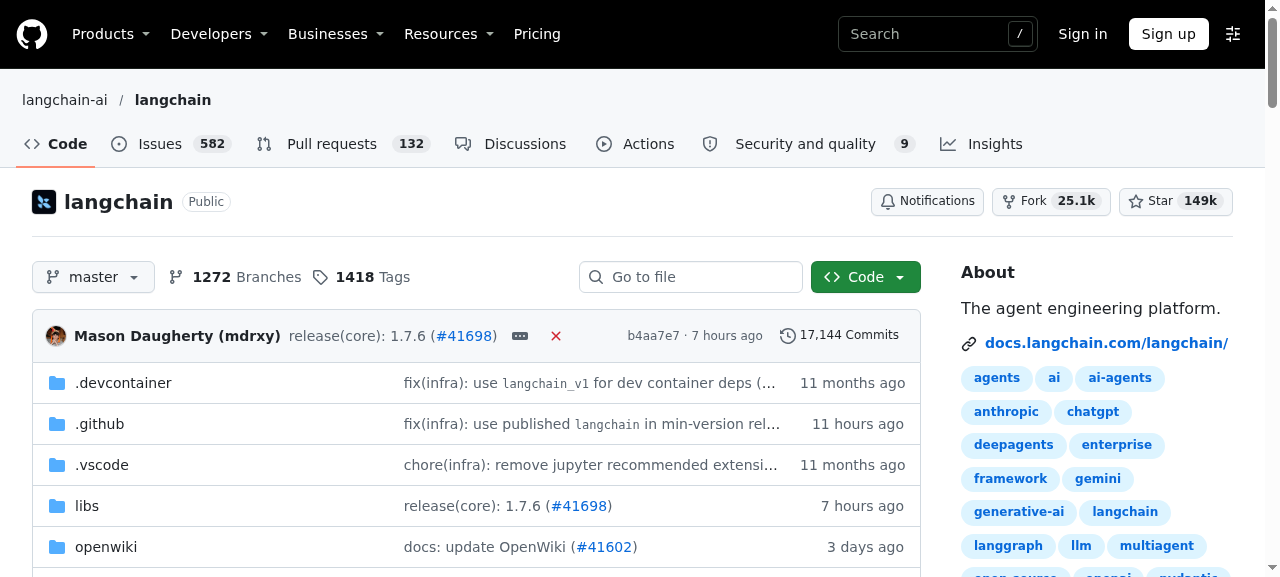
LangChain is the most popular open-source framework for building AI agents — a developer-first platform that gives maximum flexibility and control over agent architecture, tool integration, and behaviour.
LangChain: Provides a comprehensive library of components for building LLM-powered applications and agents, including tool integrations, prompt templates, memory systems, retrieval systems, and chain/agent execution frameworks. Compatible with virtually every major LLM provider.
LangGraph: LangChain’s framework for building stateful, multi-actor agent systems using a graph-based architecture. LangGraph gives developers fine-grained control over agent state management, conditional logic, and multi-agent coordination — making it ideal for complex production agent systems.
Best for: Developers who want maximum control and flexibility, complex custom agent architectures, production systems requiring fine-grained behaviour control.
Pricing: Open source (free); LangSmith observability platform has paid tiers.
Strengths: Maximum flexibility, model-agnostic, huge community, excellent observability tools.
Weaknesses: Requires coding expertise; steeper learning curve than managed platforms.
6. CrewAI & AutoGen Multi-Agent Frameworks
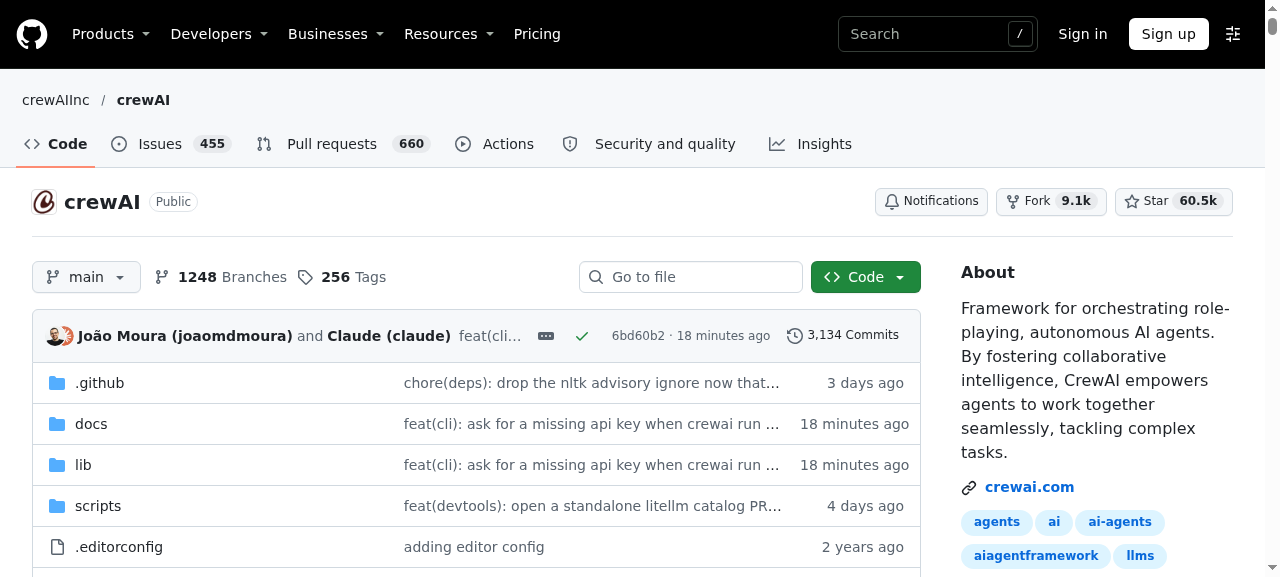
CrewAI and Microsoft AutoGen have become premier frameworks specifically for multi-agent systems — enabling developers to build teams of autonomous AI agents that collaborate to complete complex tasks, with each agent playing a distinct defined role.
Best for: Multi-agent workflows, task automation requiring specialised agents, developers building collaborative agent teams.
Pricing: Open source (free); CrewAI+ cloud platform has paid tiers.
Strengths: Intuitive multi-agent architecture, great documentation, active community, rapid development speed.
Weaknesses: Less suited to single-agent use cases; newer platform with less production battle-testing.
Quick Platform Comparison
| Platform | Best For | Coding Required | Standout Feature |
|---|---|---|---|
| OpenAI | General purpose & rapid prototyping | Optional | Broadest ecosystem |
| Claude | Complex reasoning & GUI action | Optional | Computer use |
| Gemini | Research + Google Workspace | Optional | Deep Research + 1M context |
| Microsoft Copilot | Enterprise M365 & Power Platform | No | No-code enterprise agents |
| LangChain/LangGraph | Custom agent engineering | Yes | Maximum flexibility |
| CrewAI / AutoGen | Multi-agent teams & role play | Yes | Role-based agent teams |
The right platform depends entirely on your use case, technical capability, and existing tool ecosystem. For most businesses getting started with AI agents in 2026, beginning with OpenAI’s Operator or Microsoft Copilot Studio provides the fastest path to value. For developers building custom solutions, LangChain, CrewAI, or the Anthropic SDK offer the control and flexibility needed for production-grade agent systems.
Build Autonomous AI Agents with AppSwifts
Looking to deploy custom enterprise AI agents, multi-agent pipelines, or automated customer operations? AppSwifts designs and deploys reliable production AI systems tailored to your business.
Comments
Post a Comment